

Check out our latest news as well as finding useful tips and resources.
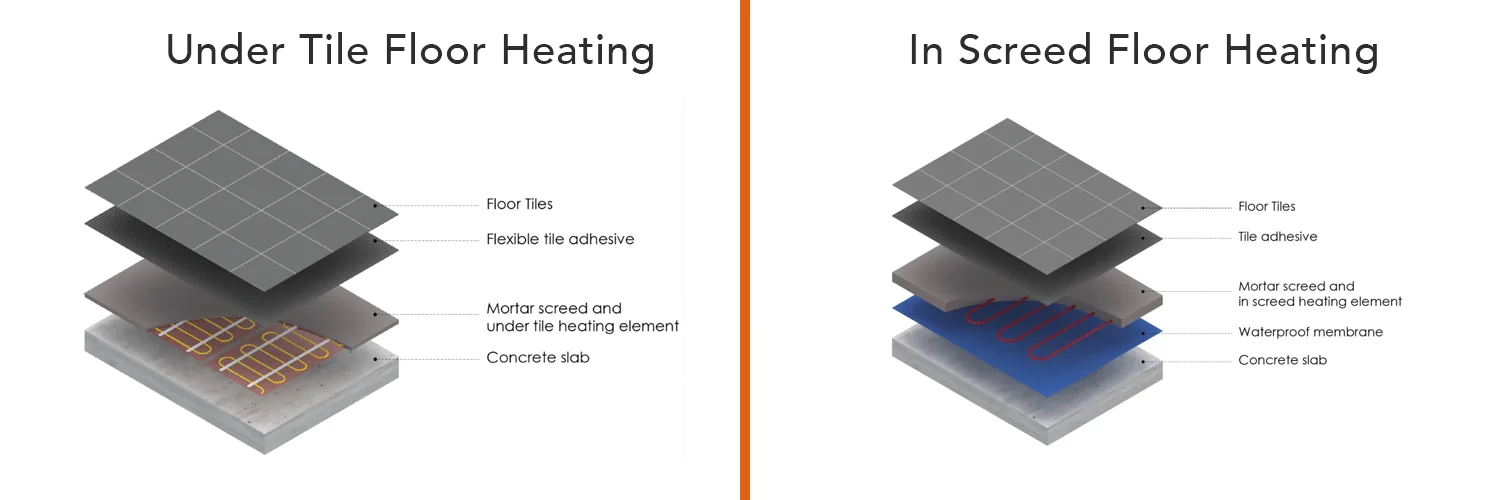
Underfloor heating is a fantastic investment for anyone looking to upgrade their home. Two of the most popular types of underfloor heating are under tile heating and in screed heating.
Are you curious about the difference between under tile and in screed heating? If you’re considering underfloor heating for your home, you’ve probably come across these terms. Don’t worry, we’re here to help you understand the distinction in this informative article.
We will start with under tile heating first.
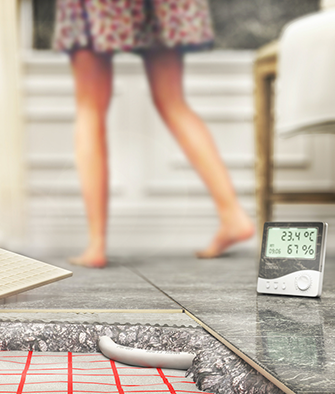
After that, the heating system is covered with tile glue, and the tiles are set in place. Because of this, your under-floor heating system can rest easily within the tile adhesive’s 6-8mm thickness without any extra height increase.
As for the in screed floor heating system, let us briefly explain what a screed is.
The primary purpose of a screed is to create a smooth and level floor to support your chosen floor finish. Additionally, it can adjust or slope the levels of a floor, especially in a bathroom In most cases, a screed commonly used in bathrooms can also help ensure proper water drainage
Typically, a screed consists of a mix of sand and cement that is spread over the floor. Think of it as a mini slab that is applied over the substrate before the floor finish is laid. Depending on the application, the screed’s thickness can vary, usually ranging from a minimum of 20 mm up to 50 mm.
Both have their advantages and disadvantages, and we’re here to break them down for you.
Below are some of the pros and cons you need to know:
Overall, both under tile heating and in screed heating have benefits and drawbacks. Ultimately, the decision between the two will depend on your specific needs and budget.
At Coldbuster, we offer both types of underfloor heating and can provide expert advice to help you make the best decision for your home.
Ready to experience the benefits of under tile heating or in screed floor heating system? Embrace the warmth and comfort of under floor heating systems for your space with Coldbuster!
At Coldbuster, we understand that underfloor heating is one of the most effective and energy-efficient ways to keep your home cosy. That’s why we offer a range of underfloor heating systems that are specifically designed to work with your floors.
Coldbuster’s in screed floor heating is suitable for the majority of floor finishes such as porcelain, marble, ceramic tiles, slate, and more. Designed to be installed directly on the existing sub floor or on top of waterproofing. The screed layer is then applied on top of the heaters and floor finish is laid over the top of the screed.
Meanwhile, our under tile floor heating kits are well suited for installation on suspended timber or concrete subfloors. Similar to in screed floor heating, they can also be used under most hard surfaces. For tiling on a suspended wooden floor, a 5mm fibre cement sheet tile underlay is required. No additional supplies are needed other than bonding supplies normally used when laying a tile floor.
Heating systems come in various types, designed to cater to different needs. And Coldbuster has a solution that’s just right for you. If you’re worried about the difficulty of installing floor heating, you can put your worries to rest. Coldbuster’s floor heating systems are also easy to install, making them the perfect choice for homeowners who are looking for a hassle-free heating option.
We also offer installation services, which means that you can leave the installation to the professionals, and we’ll take care of everything for you. And when you buy from us, you can rest assured knowing that your purchase is backed by our 100% satisfaction guarantee.
So why wait? Get in touch with us today to learn more about our underfloor heating systems and how they can help you stay comfortable in your home all year round.
Our team of floor heating experts is eager to address any inquiries you may have. Whether it’s for a new project or an existing one, we’re here to provide the assistance you need. Don’t hesitate to reach out – we’re committed to making your experience with us as smooth and enjoyable as possible.
Key Factors Affecting the Running Costs of Electric Floor Heating from Coldbuster
There are many factors and assumptions that may influence the costs of running electric floor heating.
Please note that the factors and the assumptions that underpin this Running Cost Calculator mean that results should only be used as a rough guide, as conditions (some of which are listed below) can vary greatly.
The efficiency and cost of the electricity used for heating directly impact running costs. More efficient energy sources and favourable electricity tariffs reduce overall expenses. Electricity prices vary by provider and plan. Choosing an energy-efficient tariff and monitoring peak and off-peak rates can help minimise heating costs.
The assumption in this running cost estimate model is that your energy source is cost-effective and the electricity tariff is optimised for heating needs.
The total time the heating system is operational impacts energy consumption. Running the system only when necessary and using programmable thermostats to create heating schedules can optimise usage.
The assumption in this running cost estimate model is that your heating is running only when necessary and optimised accordingly.
A duty cycle for electric underfloor heating represents the percentage of time the system is actively heating versus its total operational time. After the floor reaches its set temperature, the system cycles on and off to maintain it. The calculator factors this in and assumes a 50% duty cycle.
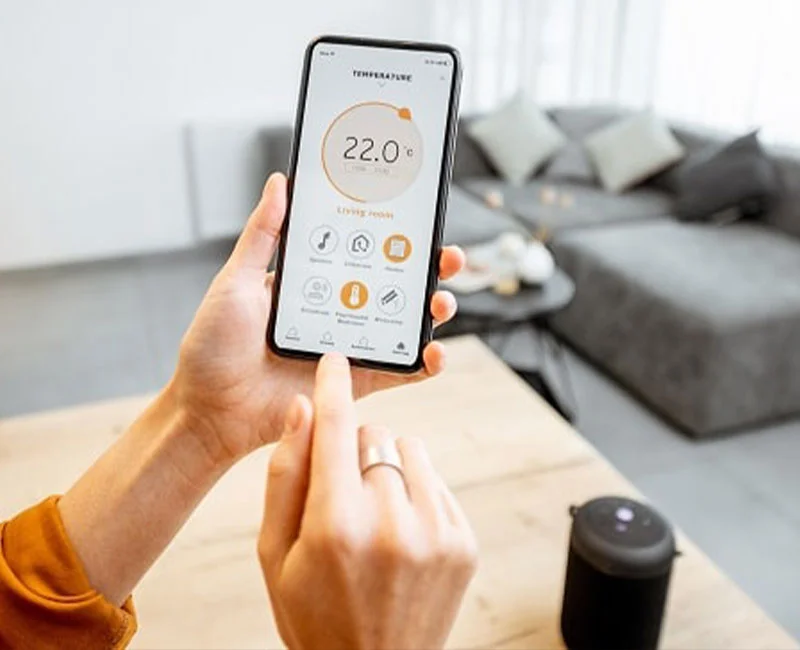
The temperature set on the thermostat directly affects energy usage. Lowering the thermostat temperature by just a few degrees can significantly reduce running costs without compromising comfort. Programmable and smart thermostats can optimise heating schedules, reducing energy use during non-peak times and enhancing overall efficiency. Setting the thermostat to an optimal temperature (e.g., 20-22°C) during occupied times and lowering it (or even better turning it off) when not in use can significantly affect running costs.
The assumption in this running cost estimate model is that you are using one of Coldbuster’s smart programmable thermostats to manage heating schedules effectively and that the settings are optimised for both comfort and efficiency.
Proper insulation reduces heat loss, making the heating system more efficient. Effective insulation in your floors, walls and roofs will help maintain the desired temperature with less energy consumption. Better insulation helps retain heat within the room, minimising the energy required to maintain comfort.
The assumption in this running cost estimate model is that your building has high-quality insulation materials installed in the walls, roof, and floor.
The type of floor substrate affects heat retention and energy efficiency. Concrete floors, for example, retain heat longer, while timber floors may require more energy to maintain warmth.
The assumption is that your floor substrate is conducive to efficient heating, with thermal insulation boards used where necessary to enhance heat retention.
Different floor coverings have varying thermal properties. Materials like tile and stone conduct heat efficiently, while carpets and wood may require higher energy to achieve the same comfort level.
The assumption in this running cost estimate model is that your flooring material is chosen with consideration of its thermal conductivity and compatibility with the heating system.
Draughts from poorly sealed windows and doors, as well as other gaps, can lead to heat loss and increased energy consumption. The type and quality of windows and doors significantly impact heat loss and gain. Double-glazing and well-sealed frames reduce draughts and improve thermal efficiency.
The assumption in this running cost estimate model is that your windows, doors, and other potential gaps are well-sealed to prevent drafts and heat loss.
The overall energy efficiency of a building, including factors like construction quality, age, design and energy ratings, all affect its thermal efficiency and hence impacts heating costs. Older buildings may have more heat loss compared to newer, energy-efficient constructions.
The assumption in this running cost estimate model is that your building is relatively modern or has been updated to meet contemporary energy efficiency standards.
The local climate influences heating needs. Colder outdoor temperatures increase the demand for indoor heating. Regions with milder winters require less heating and would therefore typically have lower running costs compared to areas with harsh winter and cold conditions.
The assumption in this running cost estimate model is based on average climatic conditions specific to the region in Australia where you are located and where the system is installed.
The efficiency of the underfloor heating system itself plays a crucial role. The efficiency determines how effectively it converts electrical energy into heat. Modern systems with advanced controls and high efficiency like Coldbuster use less energy to achieve the desired warmth.
The assumption in this running cost estimate model is that your heating system is running efficiently at all times.
The ability to control heating in different zones or rooms independently allows for more precise energy use, heating only the areas that need it.
The assumption in this running cost estimate model is that your heating system is designed with zoning capabilities for customised temperature control.
The design of the heating system, including the layout, spacing, and type of heating elements, affects heat distribution and overall efficiency. The size of the room in relation to the heater’s capacity is crucial. An appropriately sized heater ensures efficient heating without overworking the system.
The assumption in this running cost estimate model is that your heating system is designed and installed by experienced Coldbuster installation professionals or other suitably qualified professionals to ensure optimal performance and energy efficiency.
Consistent and predictable usage patterns help in planning and optimising energy consumption. Irregular or excessive use can lead to higher costs.
The assumption in this running cost estimate model is that your usage patterns are regular and not excessive.
Higher ceilings result in larger volumes of air to heat, which can increase energy consumption. Rooms with standard ceiling heights are more energy efficient.
The assumption in this running cost estimate model is that your ceiling heights are standard (2.4 to 2.7 meters) to maintain optimal energy efficiency and minimize excess energy use.