

Check out our latest news as well as finding useful tips and resources.
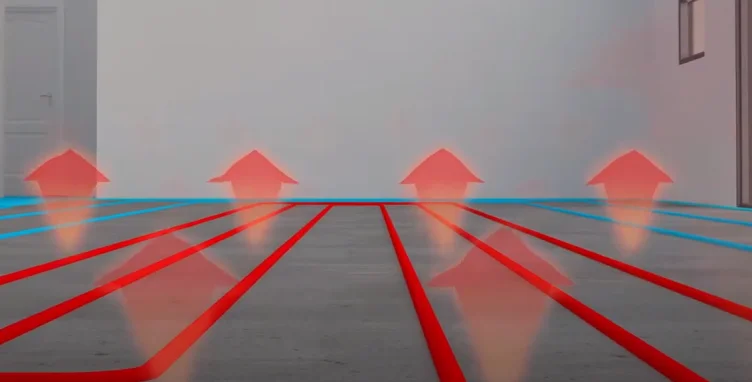
While underfloor heating is a popular addition in Australian homes, its energy-efficiency is often questioned. However, before you rush into having it installed in your home, there are a few crucial aspects to consider.
Common concerns about under-floor heating revolve around its expected energy consumption and how it stacks up against that of alternative heating options. Fortunately, an underfloor heating system offers great efficiency, which can actually lead to cost savings in the long run.
So, let’s try to debunk the myth around whether underfloor heating uses a lot of electricity in this article.
A number of factors affect how much power an underfloor heating system requires to function, including the square footage being heated and the quality of the insulation. The typical electricity consumption of an electric underfloor heating system is around 100 W/m2.
As mentioned, the amount of electricity required to power an underfloor heating system might vary depending on a number of factors. The insulation of your floors is the single most essential aspect in reducing your system’s energy consumption when heating the space.
In addition to the frequency of use and the temperature setting, other factors include the type of flooring you have. For example, if you have engineered wooden floors, then it will require more energy than tiles.
So, how much electrical power will be required, really? It depends on the following factors:
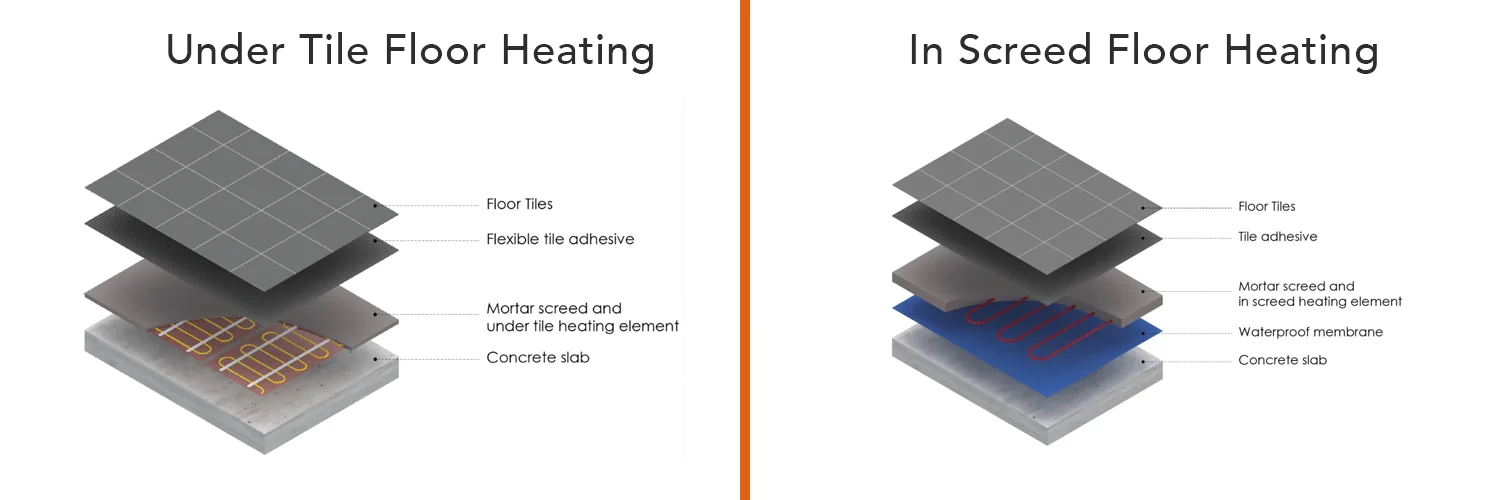
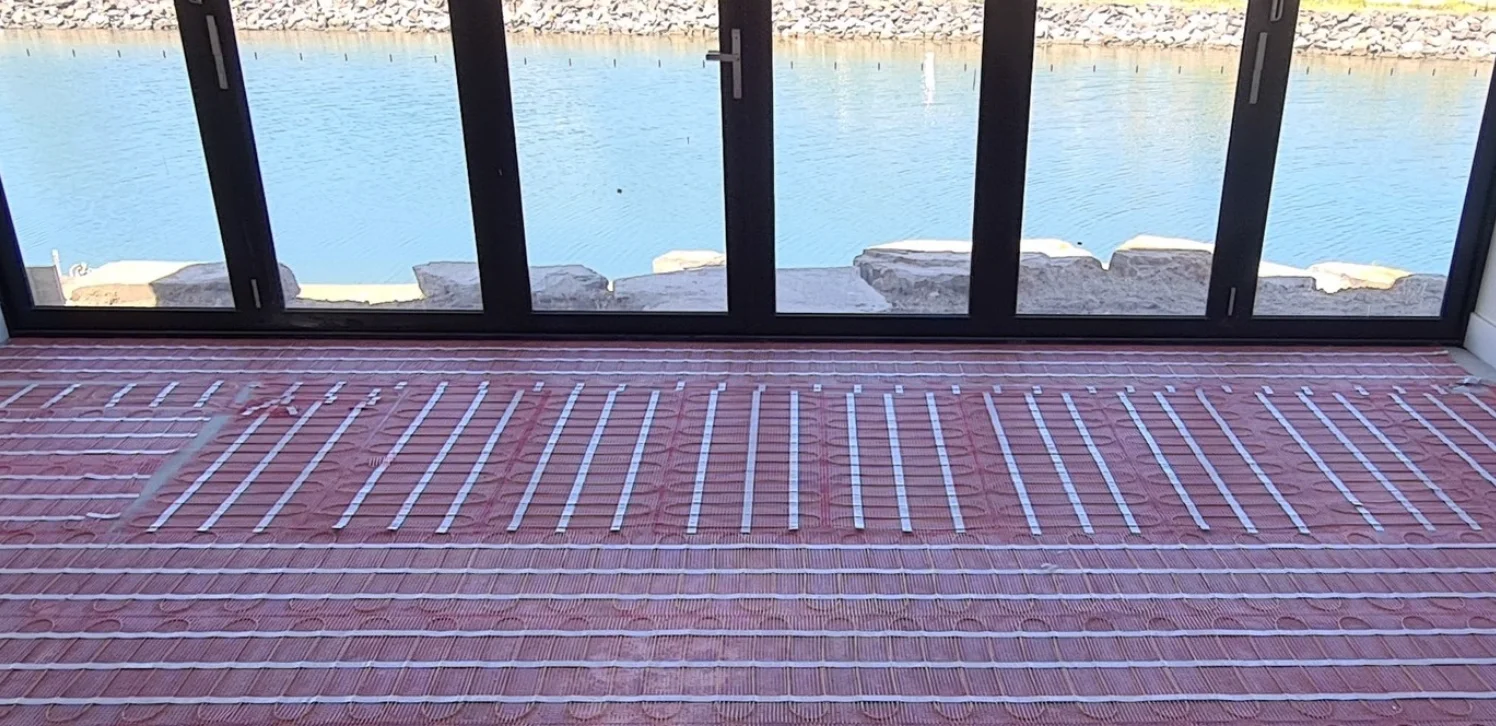
Electric underfloor heating uses electric mats or cables installed under the floor, which generate heat when an electric current passes through them. Water-based underfloor heating, also known as hydronic heating, circulates hot water through pipes installed under the floor.
Electric underfloor heating systems consume more electricity than water-based systems. They require a high initial installation cost and can be expensive to run. However, they can be more efficient in smaller rooms, as they heat up quickly and can be switched on and off as required.
Water-based systems are more efficient in larger rooms or whole-house applications, as they take longer to heat up but can retain warmth for longer.
The room’s size should also be taken into account. The cost of heating a larger space is higher since more energy is needed to keep everyone at a suitable temperature.
The same is true for heating a poorly insulated structure; more energy will be needed since heat will be lost through the ceiling, floor, and windows. Putting money into insulation is a great way to cut down on energy use and save money on your bills.
The thermostat settings have a significant impact on the amount of energy used by underfloor heating systems. If the thermostat is set too high, more energy will be used by the system than is necessary, which will increase the cost of running it.
Likewise, if the thermostat is set too low, the heating system may not supply enough warmth, resulting in discomfort and the need to resort to alternative heating techniques.
In addition, turning on and off your water underfloor heating repeatedly will cause it to consume a lot of electricity. Keeping the system at a low temperature all the time makes it far more efficient to run.
Consequences can arise from constant use of this underfloor heating system. The heating system’s durability would suffer from the repeated use.
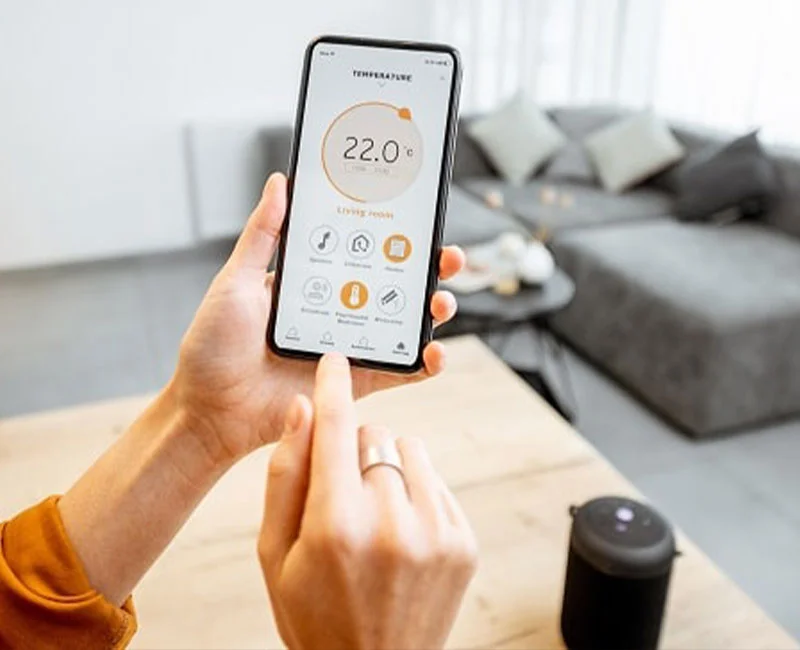
Smart thermostats are a great way to cut costs without sacrificing comfort. As smart home technology improves in sophistication and accessibility, you can upgrade your heating system to be “smarter” as well.
Controlling your home’s temperature has never been easier than with smart thermostats available for underfloor heating systems, which can be programmed to run at peak efficiency while cutting energy costs to a minimum. And with a smart thermostat that comes with WiFi connectivity, you can control the temperature from any area in your house.
You can even make your home more eco-friendly by keeping an eye on your energy consumption. Keeping tabs on how much power you use is a wonderful first step in reducing your impact on the environment and saving money on your monthly utility bills.
Furthermore, with the help of a smart thermostat, you can track your energy use and learn when you use the most power. To save money on energy costs, you don’t have to turn off your heating or electronics; rather, you can do things like set your thermostat to be turned on only when you’re at home or when you’re on the way back home.
Electricity is required for running the underfloor heating system, but how much is used depends on several variables such as the system used, the size of the room, the level of insulation you have, and the temperature settings.
While electric underfloor heating may be the most cost-effective choice for smaller spaces, hydronic systems excel at heating larger areas or a whole home. Energy consumption and costs can be reduced by installing insulation and maintaining the right thermostat settings.
If you’re ready to invest in underfloor heating, you’ve come to the right place! With over 25 years of industry experience, Coldbuster Floor Heating is the leading supplier and installer of electric floor heating Australia-wide. Our systems offer even distribution of heat, higher thermal efficiency, and lower running times compared to traditional heating methods.
Please explore our products on our website or give us a call at 1800 85 75 65. And don’t forget to use our simple calculator to get an approximate idea of the cost of running underfloor heating in your home.
Key Factors Affecting the Running Costs of Electric Floor Heating from Coldbuster
There are many factors and assumptions that may influence the costs of running electric floor heating.
Please note that the factors and the assumptions that underpin this Running Cost Calculator mean that results should only be used as a rough guide, as conditions (some of which are listed below) can vary greatly.
The efficiency and cost of the electricity used for heating directly impact running costs. More efficient energy sources and favourable electricity tariffs reduce overall expenses. Electricity prices vary by provider and plan. Choosing an energy-efficient tariff and monitoring peak and off-peak rates can help minimise heating costs.
The assumption in this running cost estimate model is that your energy source is cost-effective and the electricity tariff is optimised for heating needs.
The total time the heating system is operational impacts energy consumption. Running the system only when necessary and using programmable thermostats to create heating schedules can optimise usage.
The assumption in this running cost estimate model is that your heating is running only when necessary and optimised accordingly.
A duty cycle for electric underfloor heating represents the percentage of time the system is actively heating versus its total operational time. After the floor reaches its set temperature, the system cycles on and off to maintain it. The calculator factors this in and assumes a 50% duty cycle.
The temperature set on the thermostat directly affects energy usage. Lowering the thermostat temperature by just a few degrees can significantly reduce running costs without compromising comfort. Programmable and smart thermostats can optimise heating schedules, reducing energy use during non-peak times and enhancing overall efficiency. Setting the thermostat to an optimal temperature (e.g., 20-22°C) during occupied times and lowering it (or even better turning it off) when not in use can significantly affect running costs.
The assumption in this running cost estimate model is that you are using one of Coldbuster’s smart programmable thermostats to manage heating schedules effectively and that the settings are optimised for both comfort and efficiency.
Proper insulation reduces heat loss, making the heating system more efficient. Effective insulation in your floors, walls and roofs will help maintain the desired temperature with less energy consumption. Better insulation helps retain heat within the room, minimising the energy required to maintain comfort.
The assumption in this running cost estimate model is that your building has high-quality insulation materials installed in the walls, roof, and floor.
The type of floor substrate affects heat retention and energy efficiency. Concrete floors, for example, retain heat longer, while timber floors may require more energy to maintain warmth.
The assumption is that your floor substrate is conducive to efficient heating, with thermal insulation boards used where necessary to enhance heat retention.
Different floor coverings have varying thermal properties. Materials like tile and stone conduct heat efficiently, while carpets and wood may require higher energy to achieve the same comfort level.
The assumption in this running cost estimate model is that your flooring material is chosen with consideration of its thermal conductivity and compatibility with the heating system.
Draughts from poorly sealed windows and doors, as well as other gaps, can lead to heat loss and increased energy consumption. The type and quality of windows and doors significantly impact heat loss and gain. Double-glazing and well-sealed frames reduce draughts and improve thermal efficiency.
The assumption in this running cost estimate model is that your windows, doors, and other potential gaps are well-sealed to prevent drafts and heat loss.
The overall energy efficiency of a building, including factors like construction quality, age, design and energy ratings, all affect its thermal efficiency and hence impacts heating costs. Older buildings may have more heat loss compared to newer, energy-efficient constructions.
The assumption in this running cost estimate model is that your building is relatively modern or has been updated to meet contemporary energy efficiency standards.
The local climate influences heating needs. Colder outdoor temperatures increase the demand for indoor heating. Regions with milder winters require less heating and would therefore typically have lower running costs compared to areas with harsh winter and cold conditions.
The assumption in this running cost estimate model is based on average climatic conditions specific to the region in Australia where you are located and where the system is installed.
The efficiency of the underfloor heating system itself plays a crucial role. The efficiency determines how effectively it converts electrical energy into heat. Modern systems with advanced controls and high efficiency like Coldbuster use less energy to achieve the desired warmth.
The assumption in this running cost estimate model is that your heating system is running efficiently at all times.
The ability to control heating in different zones or rooms independently allows for more precise energy use, heating only the areas that need it.
The assumption in this running cost estimate model is that your heating system is designed with zoning capabilities for customised temperature control.
The design of the heating system, including the layout, spacing, and type of heating elements, affects heat distribution and overall efficiency. The size of the room in relation to the heater’s capacity is crucial. An appropriately sized heater ensures efficient heating without overworking the system.
The assumption in this running cost estimate model is that your heating system is designed and installed by experienced Coldbuster installation professionals or other suitably qualified professionals to ensure optimal performance and energy efficiency.
Consistent and predictable usage patterns help in planning and optimising energy consumption. Irregular or excessive use can lead to higher costs.
The assumption in this running cost estimate model is that your usage patterns are regular and not excessive.
Higher ceilings result in larger volumes of air to heat, which can increase energy consumption. Rooms with standard ceiling heights are more energy efficient.
The assumption in this running cost estimate model is that your ceiling heights are standard (2.4 to 2.7 meters) to maintain optimal energy efficiency and minimize excess energy use.